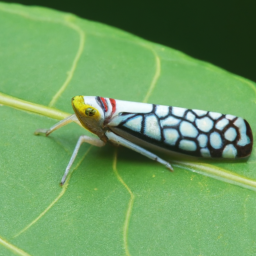
Adı : painted leafhopper
Bilimsel Adı : Endria inimica (Say)
Endria inimica (Say) is commonly known as the painted leafhopper or the eared leafhopper. It belongs to the family Cicadellidae and is found in North and Central America. This species is known for its distinct, colorful markings on its body and wings, which makes it one of the most beautiful leafhoppers.
The painted leafhopper is generally small, measuring around 6-7 mm in length. It is a very active insect and is capable of jumping long distances. The coloring of the species is quite variable, but the most common markings are black, green, and white bands on its wings and body. The head of the insect is usually black, and it has two dark spots on each side of its thorax, giving it an “eared” appearance.
Leafhoppers, in general, are plant feeders and the painted leafhopper is no exception. It feeds on the sap of several different plants, including grapevine, citrus, and avocado trees. It pierces the leaves with its mouthparts and inserts a straw-like appendage to extract plant sap. This can cause damage to the plants, resulting in yellowing and eventual death of the leaves.
One of the most interesting features of this species is its sound production. Like many other leafhoppers, it produces sounds by vibrating its abdomen, which is amplified by the wings. These sounds are not audible to the human ear but can be heard by other members of its species. It is believed that these sounds are used for mating calls and for communication.
The painted leafhopper is not considered a major pest, but it can cause damage to crops if the population is high. Control methods usually involve the use of insecticides or biological control agents such as parasitic wasps. However, due to its attractive appearance, the painted leafhopper is also collected by insect enthusiasts and used in insect collections.
In summary, the painted leafhopper is a colorful and interesting insect that is found in North and Central America. While it is not a major pest, it can cause damage to plants and crops. Its distinct markings, sound production, and active behavior make it a fascinating species to study and observe.
Adı : painted leafhopper
Bilimsel Adı : Endria inimica (Say)
Endria inimica (Say) is commonly known as the painted leafhopper or the eared leafhopper. It belongs to the family Cicadellidae and is found in North and Central America. This species is known for its distinct, colorful markings on its body and wings, which makes it one of the most beautiful leafhoppers.
The painted leafhopper is generally small, measuring around 6-7 mm in length. It is a very active insect and is capable of jumping long distances. The coloring of the species is quite variable, but the most common markings are black, green, and white bands on its wings and body. The head of the insect is usually black, and it has two dark spots on each side of its thorax, giving it an “eared” appearance.
Leafhoppers, in general, are plant feeders and the painted leafhopper is no exception. It feeds on the sap of several different plants, including grapevine, citrus, and avocado trees. It pierces the leaves with its mouthparts and inserts a straw-like appendage to extract plant sap. This can cause damage to the plants, resulting in yellowing and eventual death of the leaves.
One of the most interesting features of this species is its sound production. Like many other leafhoppers, it produces sounds by vibrating its abdomen, which is amplified by the wings. These sounds are not audible to the human ear but can be heard by other members of its species. It is believed that these sounds are used for mating calls and for communication.
The painted leafhopper is not considered a major pest, but it can cause damage to crops if the population is high. Control methods usually involve the use of insecticides or biological control agents such as parasitic wasps. However, due to its attractive appearance, the painted leafhopper is also collected by insect enthusiasts and used in insect collections.
In summary, the painted leafhopper is a colorful and interesting insect that is found in North and Central America. While it is not a major pest, it can cause damage to plants and crops. Its distinct markings, sound production, and active behavior make it a fascinating species to study and observe.
painted leafhopper Endria inimica yaprak hoparlörü bitki besleyici renkli işaretlemeler ses üretimi biyolojik kontrol böcek koleksiyonu